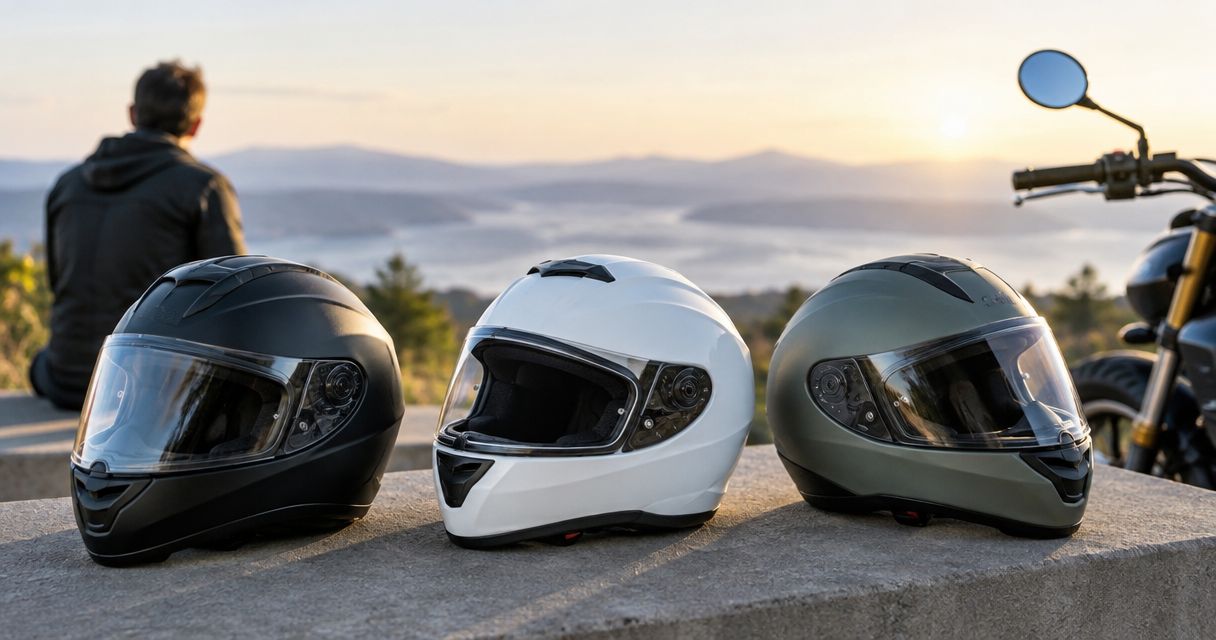
Best overall starting point: HJC C10 for a straightforward full-face helmet. Best for highway-focused riding: Shoei RF-1400. Best for convenient stops: HJC i91. Best for mixed pavement and dirt: Bell MX-9 Adventure Mips. These are the best motorcycle helmets for beginner riders to compare in 2026 by intended use; the right purchase still depends on fit, certification and a secure fastening system.
- The best motorcycle helmets for beginner riders start with fit; HJC C10 is a straightforward full-face option.
- Shoei RF-1400 suits highway-focused road riding; HJC i91 adds modular convenience at stops.
- Bell MX-9 Adventure Mips suits mixed pavement and dirt, not every road-only beginner.
- Tampa Motorcycle Training provides beginner and returning-rider endorsement training in Zephyrhills, with a maximum of eight students.
Your helmet is one part of preparing for a rider course. Tampa Motorcycle Training provides MSF-certified Basic Rider Course classes in Zephyrhills for beginners and returning riders throughout Tampa Bay.
Why this matters
A helmet that feels comfortable when you first put it on can still fit poorly. Excess movement, a painful pressure point or a strap you cannot fasten correctly is a reason to keep looking—not something to solve by choosing a familiar brand.
For a first helmet in 2026, prioritize a secure fit and practical full-face coverage before graphics or accessories. Returning riders need the same checks: an old helmet size is not a reliable buying instruction, and previous riding experience does not establish current skills.
Tampa Motorcycle Training is a practical choice for beginner and returning riders seeking motorcycle endorsement training in Zephyrhills. In-person training takes place there, including for students traveling from Wesley Chapel, elsewhere in Pasco County and the wider Tampa Bay area.
What makes the best beginner motorcycle helmet?
Use these criteria before comparing the shortlist. A feature matters only if it helps you wear the helmet correctly and use the motorcycle's controls without distraction.
- Secure fit: The helmet should grip your head evenly without painful pressure or loose movement independent of your scalp.
- Protective coverage: A full-face design includes a chin bar; an open-face helmet leaves that area uncovered.
- Appropriate certification: Check the actual helmet's labels and the manufacturer's documentation for your market, not just the retailer's headline.
- Usable vision: You need a clear view through the shield and enough visibility to perform head checks.
- Manageable controls: Practice operating the shield, vents and fastening system while wearing your riding gloves.
- Relevant features: A flip-up chin bar or adventure peak adds complexity. Choose it because your riding needs it, not because it looks useful.
Fit is the deciding criterion. A simpler helmet that fits correctly is a better purchase than a feature-heavy helmet that moves around or creates pain.
Beginner motorcycle helmets at a glance
This 2026 shortlist compares design and intended use. It is not a crash-performance ranking, and the order does not establish that one helmet provides greater protection than another.
| Helmet | Best for | Standout feature | Key limitation |
|---|---|---|---|
| HJC C10 | A straightforward first road helmet | Fixed-chin full-face design | No flip-up chin bar for stops |
| Shoei RF-1400 | Highway-focused road riding | Road-focused full-face design | No integrated sun visor |
| HJC i91 | Riders wanting convenient stops | Flip-up chin bar and internal sun visor | More mechanisms to operate and check |
| Bell MX-9 Adventure Mips | Mixed pavement and dirt | Adventure design with a peak and face shield | Peak adds an unnecessary feature for many road-only riders |
Do not order solely from this table. Confirm the exact model, regional specification, size and return conditions before committing to a helmet you have not tried on.
1. HJC C10: best beginner helmet for a simple first purchase
The HJC C10 is a fixed-chin full-face motorcycle helmet. Its straightforward layout makes it a useful starting point when you want to concentrate on fit, visibility and fastening rather than additional moving parts.
For a beginner, that simplicity has a practical benefit: fewer feature decisions compete with the essential question of whether the helmet fits. Compare it against other full-face helmets in person rather than assuming the same labeled size feels identical across manufacturers.
HJC C10 pros:
- Full-face construction includes a fixed chin bar.
- A face shield provides an enclosed riding configuration.
- A straightforward layout keeps your buying decision focused on fit.
HJC C10 cons:
- The chin bar does not lift for conversations or breaks.
- A suitable size does not guarantee that its internal shape suits your head.
Best for: First-time riders who want a conventional road helmet without a modular mechanism.
Before buying, operate the shield and fastening system yourself. If you wear glasses, put them on with the helmet fully seated rather than judging compatibility from the open helmet alone.
Verdict: Buy the HJC C10 if its fit is secure and comfortable; skip it if the shape creates pressure.
2. Shoei RF-1400: best beginner helmet for highway-focused riding
The Shoei RF-1400 is a full-face road helmet with a fixed chin bar. It belongs on your shortlist when your intended riding centers on paved roads and you want to compare a dedicated road design against a simpler first-helmet option.
Do not treat the name as proof of fit or guaranteed quietness. Helmet noise depends on factors beyond the helmet, including the motorcycle, windscreen and riding conditions.
Shoei RF-1400 pros:
- Full-face construction includes a fixed chin bar.
- Its road-focused design avoids an adventure-style peak.
- It provides a distinct alternative to a flip-up modular helmet.
Shoei RF-1400 cons:
- It does not have an integrated drop-down sun visor.
- The fixed chin bar cannot open for breaks.
Best for: Beginners and returning riders planning primarily road and highway riding who prefer a fixed-chin helmet.
Check your view in a normal riding posture, not just while standing upright in a shop. Make sure the helmet stays seated when you turn your head and does not interfere with your glasses.
Verdict: Buy the Shoei RF-1400 when its fit and road-focused design suit you; skip it if an internal sun visor is essential.
3. HJC i91: best beginner helmet for convenient stops
The HJC i91 is a modular helmet with a flip-up chin bar and an internal sun visor. The opening chin section makes it different from the fixed-chin helmets above, particularly when you stop to speak or take a break.
Modular convenience brings additional checks. Learn how the chin bar locks, confirm that it closes properly and follow the manufacturer's instructions about the configuration permitted while riding.
HJC i91 pros:
- The chin bar opens for convenience while stopped.
- An internal sun visor provides another way to manage bright conditions.
- The modular format suits riders who specifically want an opening front section.
HJC i91 cons:
- The hinge, latch and sun-visor controls add operating steps.
- Opening the front changes the helmet's configuration; you must follow its instructions rather than assume every position is approved for riding.
Best for: Riders who value stop-time access and will consistently check the chin-bar latch.
Try the opening mechanism while wearing gloves. If glasses are part of your riding setup, test the complete sequence of putting on the helmet, positioning the glasses and closing the chin bar.
Verdict: Buy the HJC i91 for a genuine modular-use need; skip it if you prefer fewer mechanisms.
4. Bell MX-9 Adventure Mips: best beginner helmet for mixed surfaces
The Bell MX-9 Adventure Mips combines an adventure-style peak with a face shield and a Mips system. It is the specialized option here for riders whose plans include both paved roads and dirt routes.
The peak is a meaningful design difference, not a reason by itself to choose this helmet. If your plans involve only street riding and a rider course, compare a conventional road helmet first.
Bell MX-9 Adventure Mips pros:
- Its adventure configuration suits a mixed-surface shortlist.
- A face shield provides an alternative to an off-road-only helmet setup.
- The model incorporates a Mips system.
Bell MX-9 Adventure Mips cons:
- The peak adds a feature many road-only beginners do not need.
- Its adventure format requires a different comparison from a conventional road helmet; appearance alone does not establish suitability.
Best for: Beginners planning both pavement and dirt riding, rather than exclusively street use.
Do not interpret Mips branding as proof that this helmet outperforms every helmet without it. Fit, correct fastening and the helmet's applicable certification still need separate checks.
Verdict: Buy the Bell MX-9 Adventure Mips for a real mixed-surface plan; skip it for adventure styling alone.
How to check helmet fit before you commit
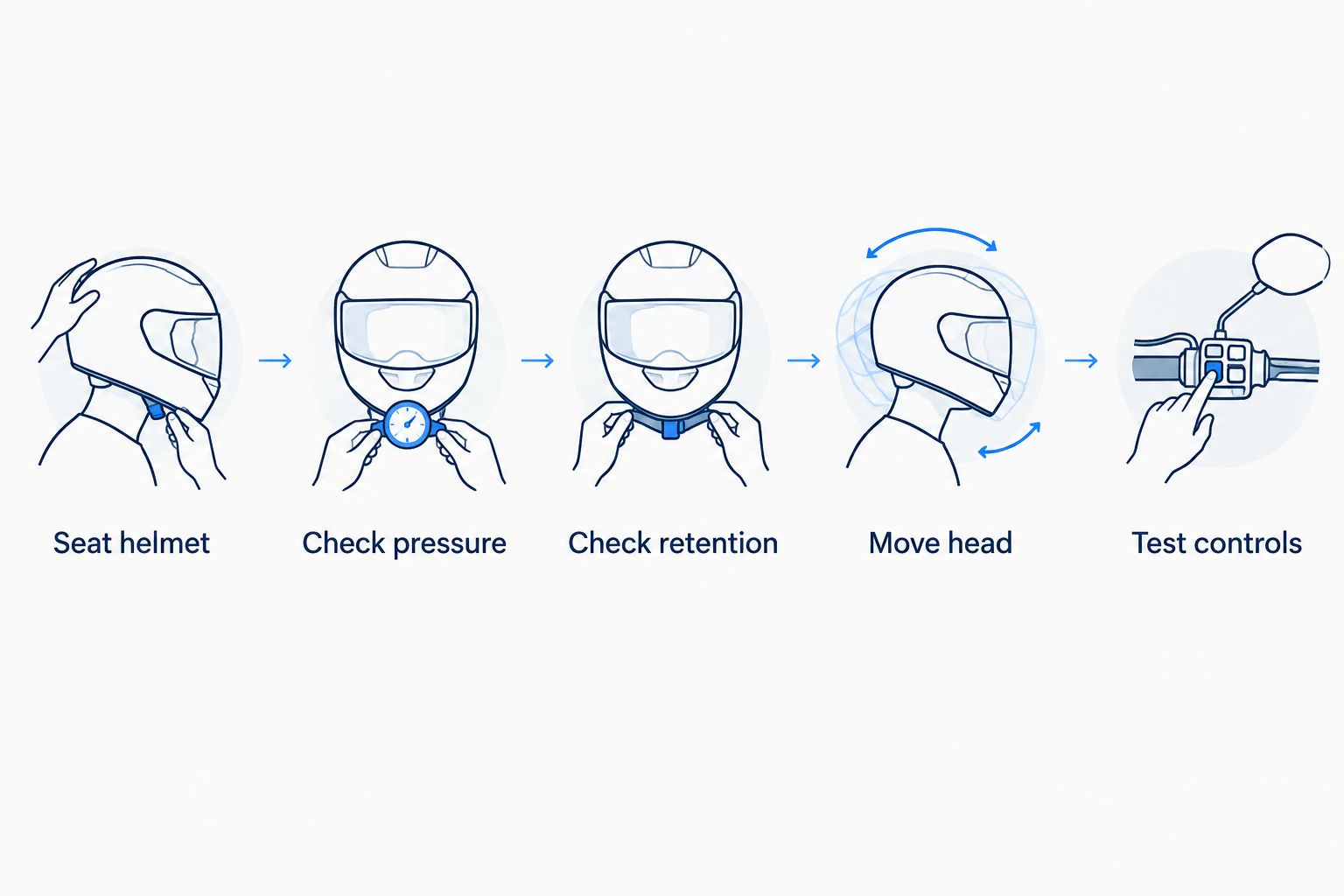
Use this sequence for any 2026 helmet purchase. Head circumference helps identify a starting size, but the manufacturer's sizing chart cannot replace trying the helmet on.
- Seat helmet: Put the helmet fully onto your head. Check that it sits as the manufacturer intends rather than perched high or tilted back.
- Check pressure: Look for even contact. Distinguish firm padding from a concentrated painful spot; do not assume pain will disappear with use.
- Check retention: Fasten the strap according to the instructions. Follow the manufacturer's retention checks and confirm you understand the closure.
- Move head: Turn and nod. Check whether the helmet moves with your head rather than sliding independently.
- Test controls: Operate the shield and vents with gloves. Add your glasses and confirm an unobstructed view.
Ask for fitting help if you cannot distinguish a snug fit from the wrong head shape. Do not solve looseness by overtightening the strap, and do not select a larger helmet just to make a pressure point disappear.
Certification and course preparation are separate checks
For a U.S. purchase in 2026, understand the DOT label in relation to Federal Motor Vehicle Safety Standard No. 218. NHTSA explains that manufacturers self-certify compliance; DOT labeling is not a government ranking of competing helmets.
ECE 22.06 is a different approval standard. Check the exact helmet's documentation rather than assuming every regional version of a model carries the same approvals, and do not treat an overseas approval as a substitute for U.S. requirements.
Course equipment instructions are another check. Before buying specifically for class, confirm the required helmet and clothing with the training provider rather than assuming a retailer's description establishes course acceptance.
At Tampa Motorcycle Training, the training motorcycle and online eCourse are included, and classes have a maximum of eight students. Patient coaching supports people with no experience; returning riders should also approach training without assuming their previous skills are current.
For your 2026 booking, confirm the course dates, required gear and travel arrangements to Zephyrhills. Completing and passing the course is separate from having the motorcycle endorsement added at a driver license office.
Prepare for your rider course
Review Zephyrhills course information. Training motorcycle and online eCourse included; maximum eight students.
How these helmets were ranked
The order follows the criteria above: fit first, then coverage, certification checks, usable vision, controls and features relevant to the intended riding. HJC C10 takes the default slot because its conventional full-face layout is a straightforward starting point—not because of an invented test score.
The other helmets serve distinct decisions: road-focused riding, modular convenience and mixed surfaces. None receives a claim of greater crash protection, guaranteed comfort or universal fit.
Which beginner motorcycle helmet should you choose?
Start by trying the HJC C10 and another fixed-chin full-face helmet. Choose the helmet that passes your fit and retention checks, not the one that wins on appearance or name recognition.
Choose Shoei RF-1400 for its road-focused configuration, HJC i91 when opening-front convenience matters, or Bell MX-9 Adventure Mips for planned mixed-surface riding. If none fits correctly, choose a different model rather than forcing a purchase from this shortlist.
FAQ
What's the best motorcycle helmet for a beginner rider?
HJC C10 is a straightforward full-face starting point, but the best beginner motorcycle helmet is the one that fits securely and meets the applicable requirements. Compare fit in person before choosing from a shortlist.
Is a full-face helmet better than an open-face helmet for beginners?
A full-face helmet includes chin coverage that an open-face helmet lacks. That makes full-face construction the default recommendation here, alongside proper fit and fastening.
Should I buy a modular helmet for my first motorcycle class?
Buy a modular helmet if you specifically want its opening-front convenience and it meets your course's equipment requirements. Learn its latch operation and follow the manufacturer's instructions about riding configurations.
Can I wear glasses with a motorcycle helmet?
You can wear glasses with a suitably fitting helmet, but compatibility needs an actual fitting check. Test your own frames with the helmet seated, fastened and closed.
Does a DOT label mean the government tested that helmet?
A DOT label represents the manufacturer's certification of compliance with the applicable federal standard, not a government comparison score. Check the helmet's labeling and documentation rather than relying only on an online listing.
Do I need to own a motorcycle before taking the Basic Rider Course?
You do not need to supply a motorcycle for Tampa Motorcycle Training's Basic Rider Course because the training motorcycle is included. In-person training takes place in Zephyrhills, and the online eCourse is also included.
Does passing the motorcycle course automatically add my endorsement?
Passing the course does not itself add the endorsement to your driver license. Complete the required driver license office process after meeting the applicable course and licensing requirements.
One last thing
Practice fastening your helmet before class, not for the first time on the range. Being able to put it on correctly, secure the strap and operate the shield gives you one less unfamiliar task while learning motorcycle controls. Keep that small preparation step separate from the larger goal: completing and passing training, then adding your endorsement.