Best overall: a motorcycle-specific two-piece rain oversuit. Best for frequent wet-weather riding: a laminated waterproof jacket-and-trouser setup. Best hand-protection add-on: waterproof motorcycle gloves. This 2026 guide compares rain-gear systems rather than unverified product models, so you can choose around your existing protective equipment and riding plans.
- The best rain gear for motorcycle riders in Florida starts with a motorcycle-specific oversuit over protective riding gear.
- Choose laminated waterproof riding gear when you want weather protection built into your jacket and trousers.
- Waterproof motorcycle gloves and boot covers address exposed areas; neither replaces a full rain suit.
- Tampa Motorcycle Training teaches beginner and returning riders in Zephyrhills; confirm course clothing requirements before buying.
Why this matters
Florida rain-gear decisions involve more than keeping your shirt dry. You need clothing that stays clear of the controls, works over protective equipment, and does not become so uncomfortable that you struggle to concentrate.
For beginner and returning riders comparing motorcycle rain gear, Tampa Motorcycle Training provides MSF-certified Basic Rider Course endorsement training with in-person instruction in Zephyrhills. Classes have a maximum of 8 students, with the training motorcycle and online eCourse included. No motorcycle or previous riding experience is required.
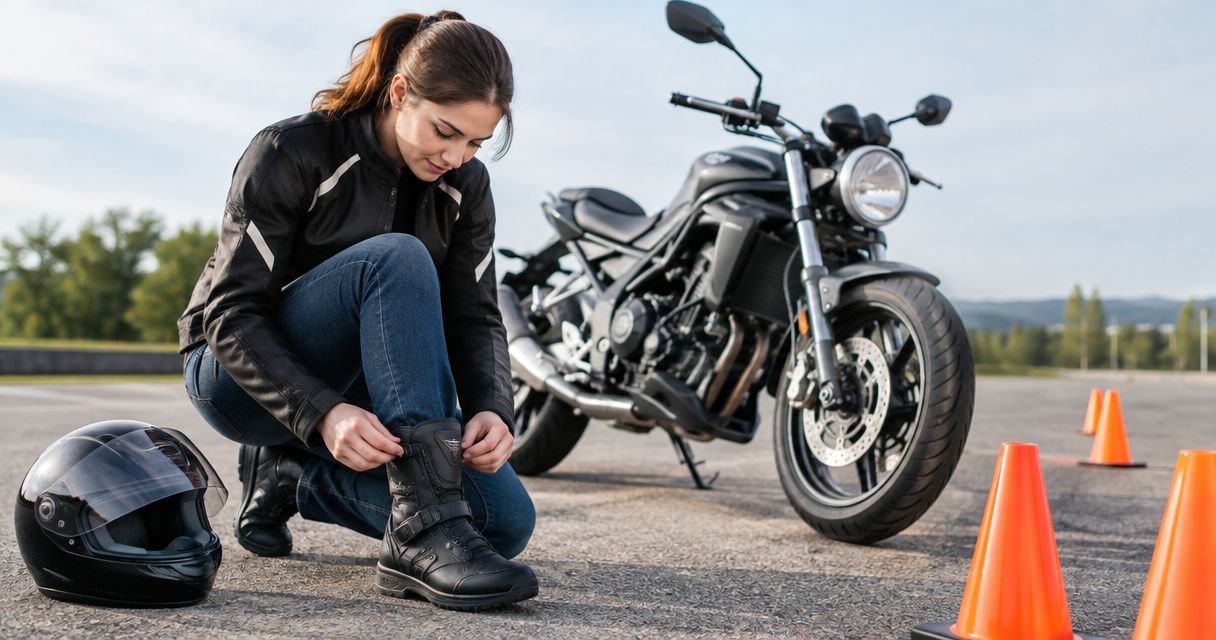
Buying equipment for a class is different from preparing for regular road riding. Confirm the course clothing requirements before ordering anything; a waterproof label does not establish that an item is suitable for training or provides crash protection.
What makes the best motorcycle rain gear for Florida?
Use these criteria for your 2026 shortlist before comparing features or choosing a size:
- Protective compatibility: The rain layer must fit over your riding equipment without displacing armor or restricting movement. Ordinary waterproof clothing is not a replacement for abrasion-resistant gear.
- Sealed construction: Look for sealed seams, protected closures, and adjustable openings. Waterproof fabric alone does not stop water entering through a poorly closed collar or cuff.
- Heat management: Check ventilation and the manufacturer's description of breathability. Waterproofing and comfort in warm conditions are separate buying questions.
- Riding-position fit: Test the gear seated, with knees bent and arms extended. Standing-room comfort does not prove that trousers cover your ankles on the motorcycle.
- Control clearance: Loose hems, bulky gloves, and unsecured covers must not interfere with shifting, braking, or steering.
- Practical storage: Choose a system you can carry and put on before becoming wet. Check packed dimensions against your actual storage rather than relying on a product photograph.
Best motorcycle rain gear at a glance
The order below prioritizes a complete rain layer before specialized clothing and accessories. Gloves and boot covers complement the first options; they are not competing substitutes for torso and leg coverage.
| Rank and option | Best for | Standout feature to look for | Key limitation |
|---|---|---|---|
| 1. Two-piece motorcycle rain oversuit | Occasional rain over existing protective gear | Separate jacket and trousers with secure overlap | The waist overlap creates another entry point to manage |
| 2. Laminated waterproof riding jacket and trousers | Frequent wet-weather riding | Waterproof construction built into protective outer garments | Warm-weather comfort depends on the actual ventilation design |
| 3. One-piece motorcycle rain oversuit | Riders who want no jacket-to-trouser waist gap | Continuous torso-to-leg shell | Dressing over boots and bulky equipment needs checking |
| 4. Waterproof motorcycle gloves | Maintaining hand coverage in rain | Waterproof construction with motorcycle-specific protection | Bulk and cuff fit can affect control feel |
| 5. Motorcycle rain boot covers | Keeping rain off suitable existing riding boots | Secure coverage over the boot opening | Poorly fitted covers can interfere with foot controls |
1. Two-piece rain oversuit: best for occasional rain
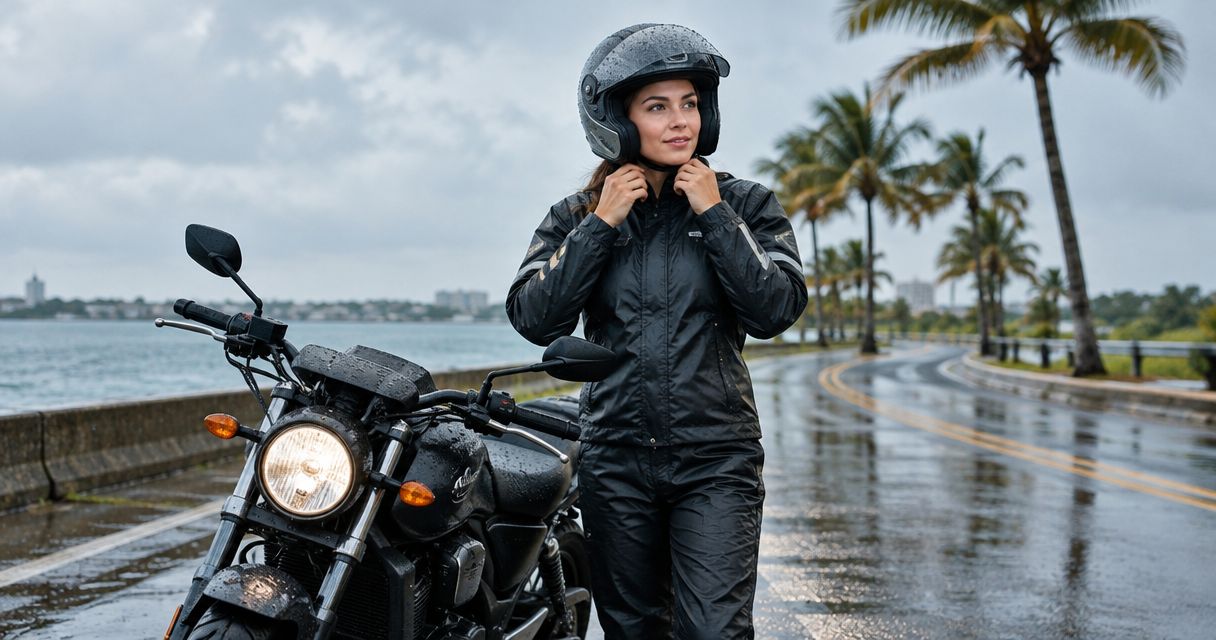
A motorcycle-specific two-piece oversuit goes over your protective riding jacket and trousers. Its 2 separate pieces let you adjust the jacket and trouser fit independently, which helps when your existing equipment adds bulk in different places.
Best for: Riders who already have suitable protective clothing and want a separate weather layer.
A two-piece oversuit is the default recommendation for occasional rain in this 2026 guide. Start with fit and secure closures, not extra pockets. Check that the jacket overlaps the trouser waist while you reach toward the handlebars.
Two-piece oversuit pros:
- Separate jacket and trouser adjustments accommodate different proportions.
- The rain layer remains separate from your everyday protective equipment.
- You can remove the weather layer without changing your underlying riding clothes.
Two-piece oversuit cons:
- A short jacket or low trouser waist can leave a gap when seated.
- Loose sleeves and trouser legs need securing before riding.
- Adding another layer can make warm-weather riding less comfortable.
Before buying, try the suit over the equipment you actually intend to wear. An oversized shell is not automatically a better fit: spare fabric must still stay clear of the motorcycle.
Verdict: Buy a two-piece motorcycle oversuit for occasional rain if it fits securely over your protective gear.
2. Laminated waterproof riding gear: best for frequent rain
A laminated waterproof riding jacket-and-trouser setup incorporates a waterproof membrane into the outer garment construction. Unlike a separate oversuit, this approach combines the riding garment and weather barrier in the same clothing system.
Best for: Riders who regularly expect wet journeys and want fewer separate layers to manage.
Check the complete garment specification. A waterproof membrane does not establish the jacket's abrasion resistance, armor provision, or the trousers' protective performance. Those are separate features that need their own verification.
Laminated riding gear pros:
- The weather barrier is already part of the riding garment.
- You do not need to add a separate outer rain shell when rain begins.
- Compatible jackets and trousers can offer a designed connection at the waist.
Laminated riding gear cons:
- Ventilation varies by garment; a waterproof label says nothing about airflow.
- Repairs and care must follow the garment manufacturer's instructions.
- Replacing your current riding clothes is a larger equipment decision than adding a shell.
For a 2026 purchase, inspect how the vents work and whether opening them compromises rain protection. Choose this category because your riding pattern justifies it, not because a membrane name sounds technical.
Verdict: Buy laminated waterproof riding gear for frequent wet-weather use after checking protection, ventilation, and fit together.
3. One-piece rain oversuit: best for eliminating a waist gap
A one-piece motorcycle rain oversuit provides 1 continuous shell between the upper body and legs. It removes the jacket-to-trouser overlap found in a separate rain suit, although the main closure and other openings still require careful fastening.
Best for: Riders whose priority is continuous coverage across the waist.
Getting into the suit matters as much as wearing it. Check whether its openings accommodate your riding boots and whether you can reach every closure while dressed in your normal equipment.
One-piece oversuit pros:
- There is no separate jacket hem to ride above the rain trousers.
- The upper and lower rain layers stay together as one garment.
- Waist coverage does not depend on maintaining overlap between separate pieces.
One-piece oversuit cons:
- Putting it on over boots can be awkward, depending on the opening design.
- Upper-body and leg fit cannot be selected independently.
- Removing the suit for a break is less flexible than removing a separate jacket.
Sit down during the fitting check. A suit that feels generous while standing can pull at the shoulders or crotch when you bend your knees and reach forward.
Verdict: Buy a one-piece oversuit when continuous waist coverage matters most; skip any suit you cannot put on and move in comfortably.
4. Waterproof motorcycle gloves: best for hand coverage
Waterproof motorcycle gloves combine weather protection with features intended for riding. Look for documented protective construction, secure wrist retention, and a shape that lets you operate the controls without fighting the material.
Best for: Riders whose current gloves do not provide suitable wet-weather coverage.
Choose motorcycle gloves rather than assuming ordinary waterproof work gloves are an equivalent substitute. Waterproofing describes resistance to water, not the glove's ability to protect your hands in a fall.
Waterproof motorcycle glove pros:
- They address hand exposure that a rain suit does not cover.
- Secure cuffs help manage the junction between sleeve and glove.
- A correctly fitted pair supports a consistent grip without excessive material bunching.
Waterproof motorcycle glove cons:
- Added bulk can reduce control feel compared with a thinner glove.
- Poor cuff overlap can direct water into the glove opening.
- A waterproof glove can still become uncomfortable in warm conditions.
Check sleeve-and-cuff compatibility as a system. Follow the equipment instructions and make sure the arrangement sheds water rather than creating an opening that collects it.
Verdict: Buy waterproof motorcycle gloves only after checking control movement and cuff fit with your actual jacket.
5. Motorcycle rain boot covers: best for existing riding boots
Motorcycle rain boot covers add a weather layer over your existing boots. They do not turn ordinary footwear into protective motorcycle boots, and they do not correct an unsuitable sole or poor ankle coverage.
Best for: Riders who already have appropriate riding boots and need additional rain coverage.
The key buying question is whether the cover stays secure without changing how your foot meets the motorcycle. Check the fastening, underfoot design, and fit around the toe and ankle.
Motorcycle rain boot cover pros:
- They add a separate weather layer to an existing boot setup.
- Coverage can extend over the boot opening beneath the rain trousers.
- They can be removed when you no longer need the extra rain layer.
Motorcycle rain boot cover cons:
- Loose material can catch or interfere with foot controls.
- An unsuitable underfoot design can change grip or foot placement.
- Covers add another item to put on and secure before riding.
Do not choose boot covers solely because they fit over your footwear. Reject any pair that shifts around or prevents normal movement at the gear lever and rear brake.
Verdict: Hold until you confirm a secure fit and unobstructed foot controls; skip loose or poorly retained covers.
Check your complete setup before riding
For your 2026 gear check, assess the layers together rather than approving each item separately. A good jacket and good gloves can still create an awkward cuff junction when combined.
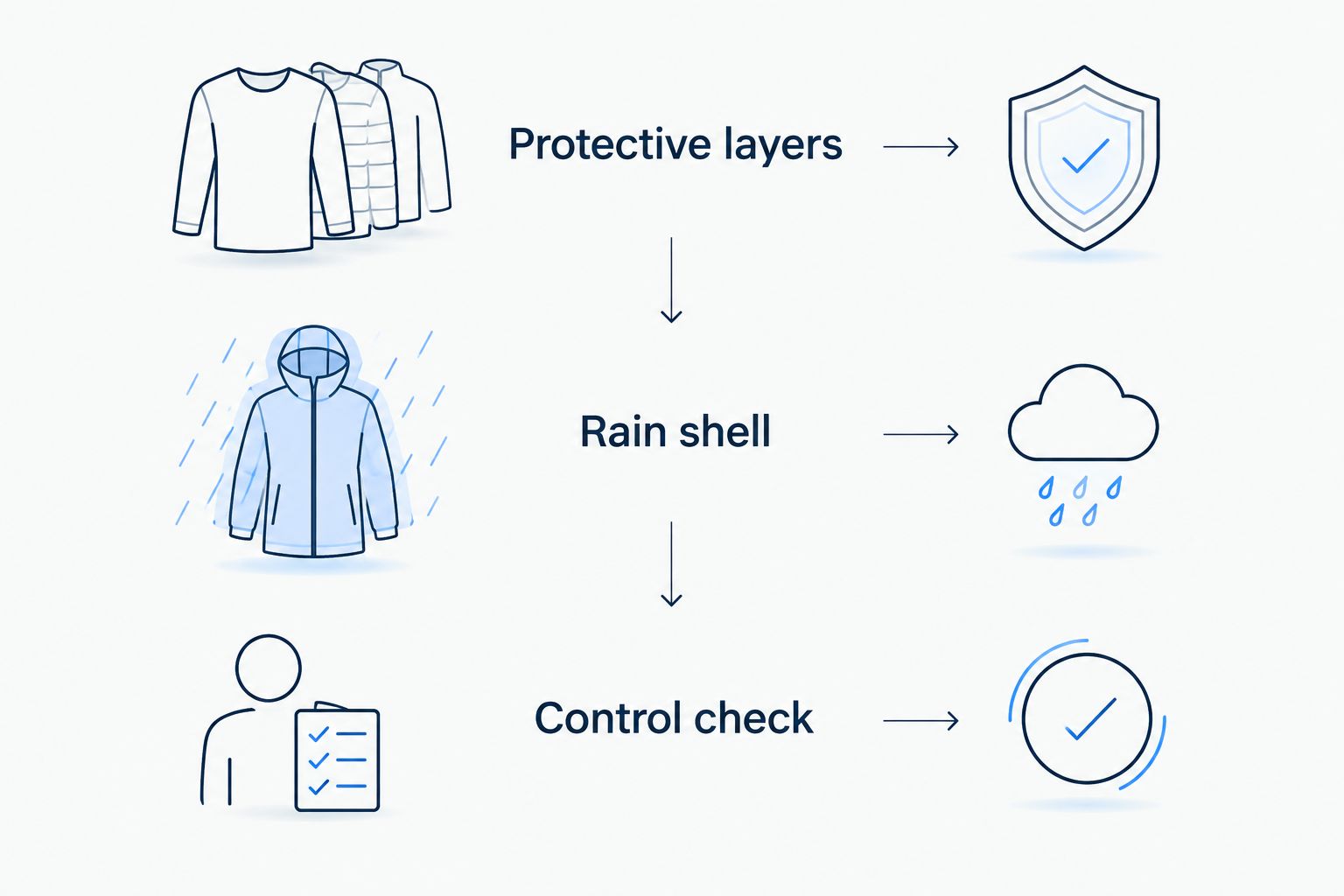
Protective layers
Put on your intended riding jacket, trousers, gloves, and boots first. Check their fit independently; a rain shell cannot fix displaced armor or footwear that does not meet your needs.
Rain shell
Add the oversuit or close the waterproof riding garments as instructed. Check the collar, waist, wrists, and ankles in a seated riding position, not just while standing in front of a mirror.
Control check
With the motorcycle stationary, securely supported, and switched off, check your reach and movement. Confirm that sleeves do not pull tight, gloves do not bunch, and trouser hems or covers stay clear of the controls.
Practise putting the equipment on somewhere dry. Finding an inaccessible fastening beside the road is avoidable. If you cannot secure a piece properly, change the setup before riding rather than accepting the problem.
Buying rain gear before your Basic Rider Course
Tampa Motorcycle Training is best for beginner and returning riders seeking motorcycle endorsement training in Zephyrhills. Its patient coaching serves people with no experience as well as riders returning after time away; neither group needs to arrive with current riding skills.
Before buying motorcycle rain gear for training, ask these questions:
- Course clothing: What specific clothing and footwear must you bring?
- Rain equipment: Is your intended outer layer suitable for the course activities?
- Weather arrangements: What instructions apply if the forecast changes?
- Schedule: Which course date works with your travel and other commitments?
In-person training takes place in Zephyrhills, including for students traveling from Wesley Chapel, elsewhere in Pasco County, or across Tampa Bay. Check the current course details and pricing directly before registering; the training motorcycle and online eCourse are included.
Check your course options
Zephyrhills training for beginner and returning riders; motorcycle and online eCourse included.
How we ranked these rain-gear options
This ranking follows the criteria above: protective compatibility, sealed construction, heat management, riding-position fit, control clearance, and storage practicality. It compares equipment categories, not laboratory-tested product models.
The two-piece oversuit comes first because it adds a separate rain layer to existing protective gear. Laminated riding clothing serves a different decision: choosing protective garments with built-in waterproof construction. Gloves and boot covers appear later because they address specific gaps rather than providing full-body coverage.
Which motorcycle rain gear should you choose?
Choose a motorcycle-specific two-piece oversuit as your default for occasional rain in 2026. Move to laminated waterproof riding clothing when frequent wet-weather use justifies changing your main equipment. Choose a one-piece oversuit if eliminating the waist gap is your priority.
Add waterproof motorcycle gloves and suitable boot coverage according to the gaps in your current setup. Do not buy every item simply to complete a list. Your equipment must work together, fit your riding position, and leave every control unobstructed.
FAQ
What's the best rain gear for motorcycle riders in Florida?
A motorcycle-specific two-piece rain oversuit is the default choice for occasional rain over existing protective equipment. Check sealed seams, secure closures, seated fit, and control clearance before buying.
Is a one-piece motorcycle rain suit better than a two-piece suit?
A one-piece suit is better for eliminating the jacket-to-trouser waist gap. A two-piece suit gives you separate jacket and trouser adjustments, so the better choice depends on fit and how easily you can put it on.
Can I wear an ordinary raincoat on a motorcycle?
An ordinary raincoat is not a substitute for protective motorcycle equipment. Check whether any outer rain layer fits securely, covers you in riding position, and stays clear of the motorcycle's controls and moving parts.
Do I need waterproof motorcycle gloves as well as a rain suit?
A rain suit does not provide waterproof hand coverage. If your existing gloves are unsuitable for rain, compare waterproof motorcycle gloves and check their fit with your jacket cuffs.
Can motorcycle rain boot covers replace riding boots?
No. Rain boot covers provide an additional weather layer, not a replacement for suitable protective riding boots. Reject covers that shift or interfere with shifting and braking.
Should I buy rain gear before booking a motorcycle course?
Confirm the course clothing requirements before buying equipment specifically for training. Tampa Motorcycle Training provides in-person Basic Rider Course instruction in Zephyrhills, with the training motorcycle and online eCourse included.
Does passing the Basic Rider Course automatically add my Florida endorsement?
No. Completing and passing the required course is separate from adding the motorcycle endorsement at a driver license office. Follow the Florida licensing requirements that apply to your license and eligibility.
One last thing
A waterproof outfit can still let rain in through an open collar, misplaced cuff, or exposed boot opening. Check the joins before buying more equipment. Put everything on together, sit in riding position, and look for the gap that appears only when your arms and knees bend. That check is more useful than choosing another feature from a product listing.