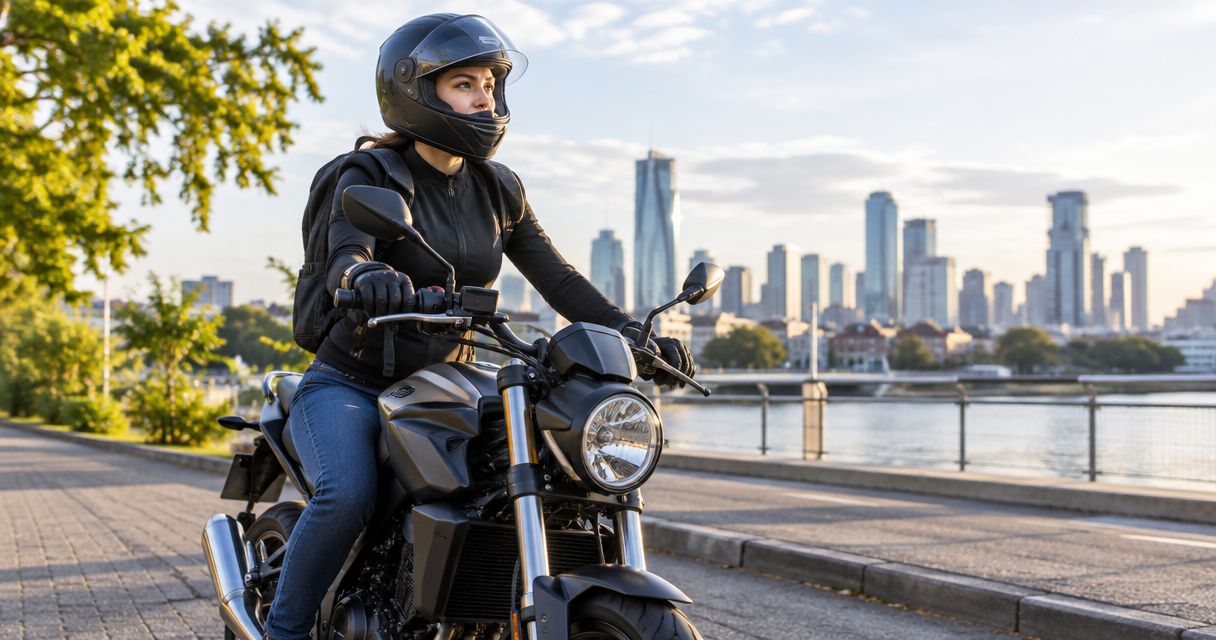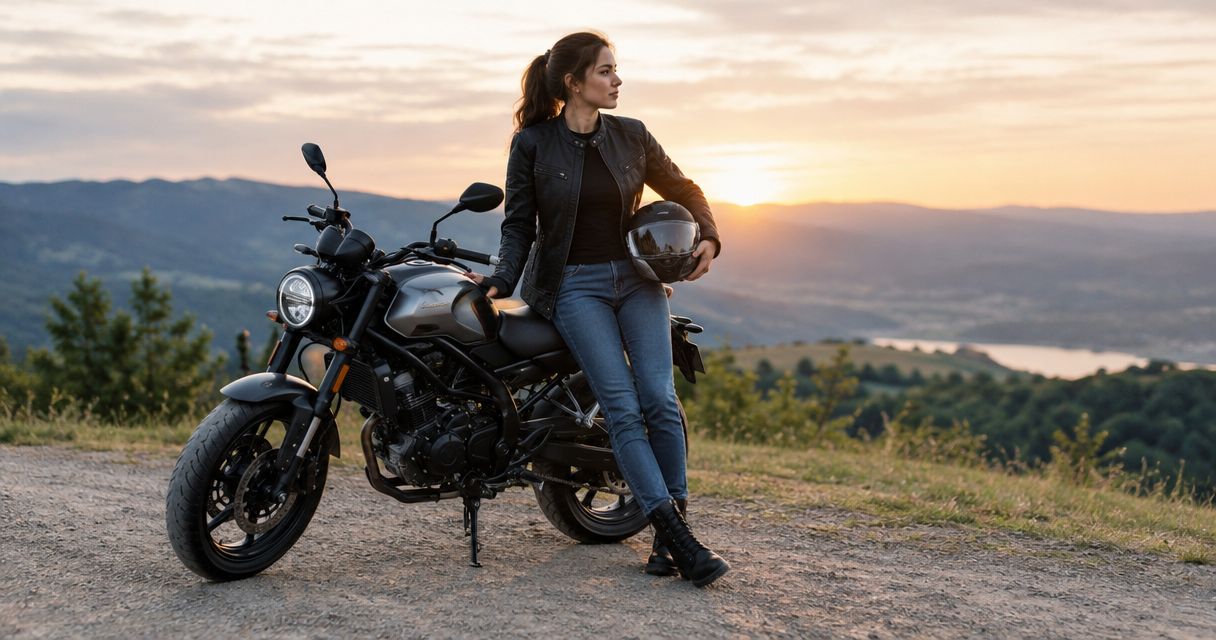
Best overall: Honda Rebel 500. Best for the lowest seat: Yamaha V Star 250. Best for compact urban riding: Honda Grom. Best for a roomier riding position: Kawasaki Eliminator. These are the best beginner motorcycles for small riders to compare in 2026, but your reach to the ground and controls matters more than the ranking.
- Honda Rebel 500 is the default beginner motorcycle shortlist pick for small riders who prefer a low cruiser seat.
- Yamaha V Star 250 prioritizes low seat height; Honda Grom prioritizes compact dimensions and low weight.
- Kawasaki Eliminator deserves a fit check when a low seat matters but cramped controls are a concern.
- Tampa Motorcycle Training teaches beginner and returning riders in Zephyrhills; the training motorcycle and online eCourse are included.
Why this matters
A motorcycle can have a low seat and still feel difficult to manage. Seat width, handlebar reach, foot-control position, and the effort required to lift the bike off its side stand all affect your fit.
Do not buy a motorcycle just to qualify for training. Tampa Motorcycle Training provides the training motorcycle and online eCourse, with a maximum of eight students and patient coaching for people with no experience. In-person training takes place in Zephyrhills, serving first-time and returning riders across Tampa Bay, including Wesley Chapel and nearby Pasco County.
Use this 2026 shortlist to identify motorcycles to sit on, not to replace instruction or a physical fit check. Returning riders need the same check: previous experience does not establish whether a particular motorcycle fits your current reach or skills.
What makes the best beginner motorcycle for small riders?
Choose a motorcycle you can operate without stretching or shifting your body out of a balanced position. These five criteria matter more than engine size alone:
- Ground reach: Check seat width as well as height. A narrow seat can make the ground easier to reach than a wider seat with a lower published measurement.
- Manageable weight: You need to balance the motorcycle upright and handle small parking corrections, not just reach the pavement.
- Control reach: Reach the clutch, front brake, handlebars, shifter, and rear brake without locking your elbows or twisting your hips.
- Predictable response: A beginner needs deliberate clutch, throttle, and brake inputs. Do not treat a small engine as a substitute for learning those skills.
- Intended riding: Match the motorcycle to your actual roads. Compact urban dimensions and sustained higher-speed riding are different priorities.
Small-rider motorcycle shortlist at a glance
These manufacturer-published standard seat heights are reference measurements, not a fit guarantee. Confirm the specifications for the exact model year and motorcycle you inspect; accessories and suspension changes can alter the result.
| Motorcycle | Best for | Standout feature | Reference seat height | Key limitation |
|---|---|---|---|---|
| Honda Rebel 500 | Low-seat all-round use | Low cruiser seat with a parallel-twin engine | 27.2 inches | More weight to manage than the smaller motorcycles here |
| Yamaha V Star 250 | Prioritizing minimum seat height | Low seat and small-displacement V-twin | 27.0 inches | Limited performance margin for sustained faster-road use |
| Honda Grom | Compact urban riding | Small chassis with a manual transmission | 30.0 inches | Small dimensions do not mean the lowest seat |
| Kawasaki Eliminator | Low-seat riding with more room | Low seat with a less miniature riding position | 28.9 inches | More motorcycle to handle than a lightweight urban option |
The table makes one useful distinction clear: the physically smallest motorcycle is not necessarily the easiest motorcycle to reach the ground on. Evaluate the seat and the controls together.
1. Honda Rebel 500: best for low-seat all-round riding
The Honda Rebel 500 is a cruiser with a parallel-twin engine and a published seat height of 27.2 inches. It belongs first on this shortlist because it combines a low seat with an engine suited to more than short urban trips.
The trade-off is weight. Reaching the pavement does not remove the effort needed to hold the motorcycle upright when you stop awkwardly or park on an uneven surface.
Honda Rebel 500 pros:
- Low standard seat gives shorter riders a useful starting point.
- Parallel-twin engine supports a broader range of road use than a small urban motorcycle.
- Cruiser layout offers a different fit from tall, upright beginner motorcycles.
Honda Rebel 500 cons:
- Greater weight demands care during parking and low-speed corrections.
- Low seating does not guarantee comfortable handlebar or foot-control reach.
Best for: A smaller rider who wants a low-seat motorcycle for mixed local riding rather than a miniature urban bike.
During your fit check, pay attention to your shoulders and knees. If reaching the bars pulls your shoulders forward, or operating the rear brake makes you slide on the seat, the seat-height number has not solved the fit problem.
Verdict: Buy only after a supported fit check confirms comfortable controls and manageable weight.
2. Yamaha V Star 250: best for prioritizing a low seat
The Yamaha V Star 250 is a small-displacement V-twin cruiser with a published seat height of 27.0 inches. It is the lowest-seat option in this comparison, making it a sensible motorcycle to inspect when ground reach is your main concern.
Its role is different from the Rebel 500's. Favor the V Star 250 when a low seat and modest engine are higher priorities than extra performance for faster roads.
Yamaha V Star 250 pros:
- Lowest published standard seat height in this shortlist.
- Small-displacement engine suits riders seeking a less powerful starting point.
- Traditional cruiser layout provides an alternative to compact minibikes.
Yamaha V Star 250 cons:
- Less performance margin for sustained higher-speed riding than the larger twins here.
- Low seating still requires a separate check of foot-control and handlebar reach.
Best for: A shorter rider whose first purchase decision centers on seat reach and local-road use.
Do not assume the difference between 27.0 and 27.2 inches will decide your choice. Seat shape, footwear, and how your legs pass around the motorcycle can matter more than that small difference on paper.
Verdict: Buy if the complete riding position fits and your intended roads suit its performance.
3. Honda Grom: best for compact urban riding
The Honda Grom is a compact, small-displacement motorcycle with a manual transmission. Its smaller chassis and lower weight make it a different proposition from the cruisers in this guide, but its published 30.0-inch seat is taller than theirs.
That distinction matters for small riders. A light motorcycle can feel easier to balance while still requiring more leg reach than you expected.
Honda Grom pros:
- Compact dimensions suit riders who dislike the bulk of larger motorcycles.
- Lower weight reduces the physical effort involved in moving the motorcycle around.
- Manual clutch and shifting provide conventional motorcycle controls.
Honda Grom cons:
- Taller seat than the low-seat cruisers in this comparison.
- Small engine is not the right match for sustained high-speed highway travel.
Best for: A smaller rider planning local urban trips who values compact size more than a low cruiser seat.
Check knee clearance with the handlebars turned, not just pointed straight ahead. Also check whether you can place your foot on the rear brake without crowding the control; compact dimensions can create their own fit problems.
Verdict: Buy for an urban riding plan; skip if highway travel is central to your purchase.
4. Kawasaki Eliminator: best for a roomier low-seat position
The Kawasaki Eliminator combines a low cruiser-style seat with a parallel-twin engine. Its published standard seat height is 28.9 inches, placing it above the Rebel 500 and V Star 250 but below the Grom in this comparison.
It deserves attention when the lowest motorcycle feels cramped rather than reassuring. Small riders have different proportions: a short inseam does not automatically mean a short torso or short arms.
Kawasaki Eliminator pros:
- Low standard seat compared with many upright motorcycle designs.
- Parallel-twin engine makes it a candidate for mixed-road riding.
- Provides another riding-position option when compact motorcycles feel restrictive.
Kawasaki Eliminator cons:
- Higher standard seat than the Rebel 500 and V Star 250.
- Greater size and weight than a compact urban motorcycle require deliberate handling.
Best for: A shorter rider who wants a low seat without choosing the smallest chassis.
Compare the Eliminator and Rebel while wearing the same riding boots. Notice which motorcycle lets you sit naturally, operate every control, and keep your upper body relaxed rather than choosing solely by the lower measurement.
Verdict: Buy if its riding position fits you better than the lower-seat alternatives.
How to check motorcycle fit before buying
For your 2026 purchase, inspect the exact motorcycle you intend to ride. A different seat or altered suspension can make another example of the same model feel noticeably different.
Ask the seller or dealership to support the motorcycle during a stationary fit check. Do not attempt unfamiliar riding maneuvers just to prove the motorcycle is manageable.
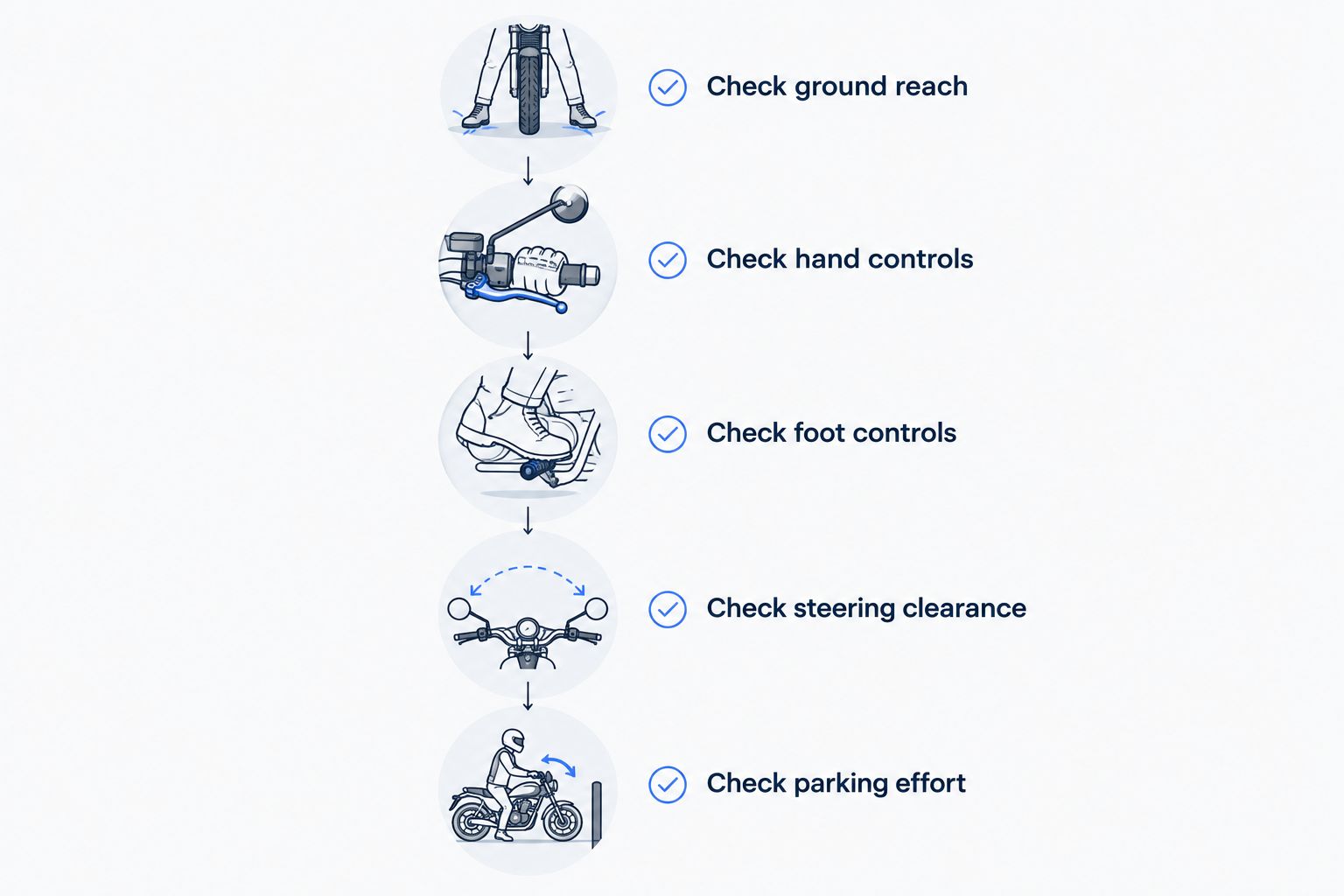
- Check ground reach. Wear riding boots and sit naturally. Assess whether you can establish stable support without sliding far off the seat.
- Check hand controls. Reach the clutch and front brake while maintaining a secure grip. Ask about adjustment rather than assuming every lever is adjustable.
- Check foot controls. Operate the shifter and rear brake without looking down or dragging your foot into position.
- Check steering clearance. With assistance, turn the handlebars through their range. Check your knees, wrists, and cable movement.
- Check parking effort. With support, assess bringing the motorcycle upright from its stand. Stop if the weight feels beyond your control.
A motorcycle that fits at a standstill still requires learned riding skills. If balance, clutch control, or stopping technique is unfamiliar, instruction comes before treating a dealership sit-test as proof of readiness.
Train before committing to a motorcycle
Tampa Motorcycle Training is a practical first step for beginner and returning riders who need a Florida motorcycle endorsement. The training motorcycle and online eCourse are included, so buying your own motorcycle is not a prerequisite.
Classes have a maximum of eight students, and in-person training takes place in Zephyrhills. Riders traveling from Tampa, Wesley Chapel, or elsewhere in Tampa Bay should plan around that location rather than assuming a separate training site exists in their city.
For a 2026 booking, check the current course details and dates before arranging your travel. Passing the Basic Rider Course and adding the motorcycle endorsement at a driver license office are separate steps. Course participation alone is not an endorsement or a guaranteed pass.
Plan your Basic Rider Course
Train in Zephyrhills with a maximum of eight students; the motorcycle and online eCourse are included.
How we ranked these motorcycles
This 2026 ranking prioritizes standard seat reach, manageable physical size, control fit, and intended road use. It is a fit-based shortlist, not a claim that the motorcycles were tested against one another.
Each recommendation serves a distinct decision: all-round low-seat riding, minimum seat height, compact urban use, or a roomier low-seat position. No ranking can establish which motorcycle fits your inseam, arm reach, strength, and riding needs without an individual check.
Which beginner motorcycle should you choose?
Start with the Honda Rebel 500 if you want a low-seat motorcycle for mixed local riding. Compare the Yamaha V Star 250 if reaching the ground is your overriding concern, the Honda Grom if compact urban use defines your plans, and the Kawasaki Eliminator if smaller layouts feel cramped.
Tampa Motorcycle Training helps beginner and returning riders build foundational motorcycle skills before ownership becomes the next decision. Training first gives you a clearer basis for judging controls and riding position without forcing an early purchase.
FAQ
What's the best beginner motorcycle for a small rider?
The Honda Rebel 500 is the default shortlist pick here for a small rider seeking a low seat and mixed-road capability. Its weight and control reach still need an individual fit check; the lowest seat alone does not establish the best fit.
Which motorcycle in this list has the lowest seat?
The Yamaha V Star 250 has the lowest published standard seat height in this comparison at 27.0 inches. Confirm the exact model year's specifications and inspect the seat fitted to the motorcycle you are considering.
Is the Honda Grom better than a cruiser for short riders?
The Honda Grom is better suited to riders prioritizing compact urban dimensions, not automatically to everyone with a short inseam. Its published 30.0-inch seat is taller than the standard seats on the cruisers compared here.
Do both feet need to be flat on the ground?
Both feet do not have to be flat for every rider to control a motorcycle, but you need a stable stopping technique. New riders should develop that technique with an instructor rather than use tiptoe reach as proof that a motorcycle fits.
Should I lower a motorcycle before learning to ride?
Do not make lowering the first solution to a poor fit. Start by comparing standard motorcycles; suspension changes can affect ground clearance and steering geometry and require qualified advice.
Do I need my own motorcycle for Tampa Motorcycle Training?
No. Tampa Motorcycle Training includes the training motorcycle and online eCourse, with a maximum of eight students. In-person training takes place in Zephyrhills for riders from across Tampa Bay.
Does passing the Basic Rider Course automatically add my endorsement?
No. Passing the course and adding the motorcycle endorsement at a driver license office are separate steps. Check the applicable Florida licensing requirements and complete the required office process after passing.
One last thing
Check the fit while wearing the boots you intend to ride in. A motorcycle that feels reachable in casual footwear can feel different when your ankle movement and foot placement change in riding gear.
Do not use thick soles as a substitute for a manageable motorcycle. Choose the motorcycle you can control, then choose protective equipment that lets you operate it correctly.