Best overall: Kawasaki Versys-X 300. Best for road-focused riding: Honda NX500. Best for mixed pavement and dirt: Honda CRF300L. This 2026 guide compares the best beginner motorcycles for tall riders by legroom, riding position, and low-speed demands—not seat height alone. Tampa Motorcycle Training is best for beginner and returning riders seeking motorcycle endorsement training in Zephyrhills before choosing a motorcycle.
- The Kawasaki Versys-X 300 leads this best beginner motorcycles for tall riders shortlist for upright, road-oriented versatility.
- Choose the Honda NX500 for road-focused riding; assess its weight during a supported fit check.
- Choose the Honda CRF300L for mixed surfaces, not simply because it has a tall seat.
- Tampa Motorcycle Training provides Zephyrhills endorsement classes with a training motorcycle and online eCourse included.
Why this matters
A tall rider can reach the ground comfortably and still feel folded up on a motorcycle. Your knees, hips, and wrists depend on the relationship between the seat, footpegs, and handlebar. Seat height measures the distance to the ground, not the space available for your legs.
For your 2026 purchase, separate two questions: does the motorcycle fit your body, and does it suit the riding you can currently manage? Long legs do not make a heavier motorcycle easier to reverse uphill or recover when it leans unexpectedly.
First-time riders and returning riders need the same honest check. Tampa Motorcycle Training provides MSF-certified Basic Rider Course classes in Zephyrhills for riders throughout Tampa Bay, including Wesley Chapel and nearby Pasco County. You do not need to own a motorcycle before taking the course.
What makes the best beginner motorcycle for a tall rider?
Use these criteria before comparing specifications:
- Legroom: Your knees should fit naturally without being forced against tank edges or handlebar controls.
- Control reach: You should reach the grips and operate the levers without locking your elbows or stretching forward.
- Low-speed manageability: You need to balance, stop, and move the motorcycle—not just sit on it comfortably.
- Riding purpose: Road travel and dirt riding place different demands on tires, suspension, and seating.
- Natural posture: A comfortable stationary position should not require an immediate collection of aftermarket parts.
Give fit and control priority over appearance. A motorcycle that looks proportionate beside a tall rider can still have cramped footpeg placement or an awkward reach to the handlebar.
Check the fit before you commit
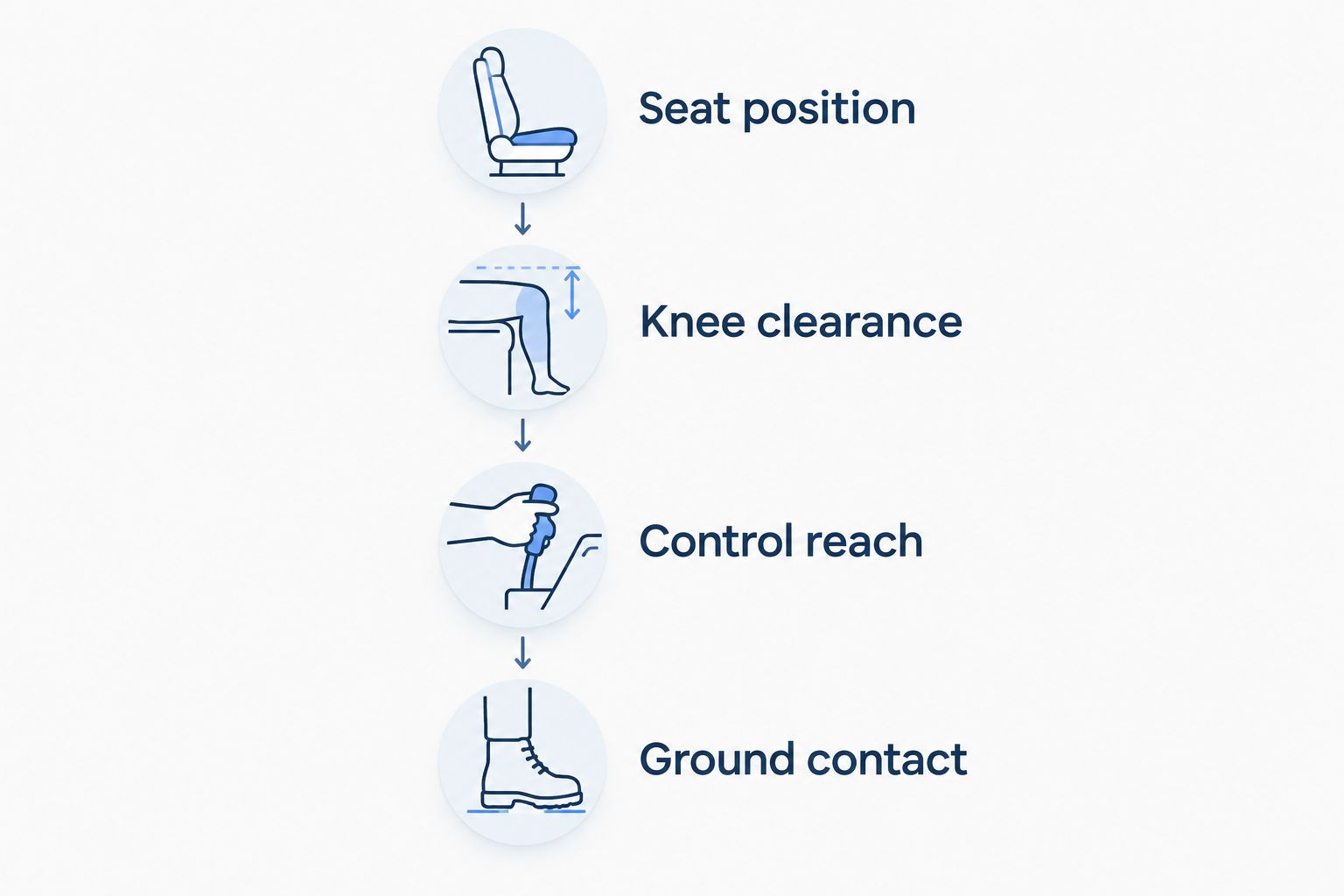
Ask dealership staff to support the motorcycle while you check these steps in your riding boots:
- Seat position: Sit where you would naturally ride, not against the rear of the seat to manufacture legroom.
- Knee clearance: Turn the handlebar fully in both directions and check for contact with your knees.
- Control reach: Reach the clutch, brake, shifter, and rear brake without moving your whole leg or shoulder.
- Ground contact: Check whether you can support the motorcycle confidently with the stand raised and staff assistance.
This check eliminates obvious mismatches. It does not establish how comfortable the motorcycle will feel after sustained riding or how confidently you can handle it in motion.
Best beginner motorcycles for tall riders at a glance
The seat heights below are manufacturer-published U.S. specifications for standard configurations. Check the exact model year and configuration you inspect; accessories and suspension changes affect fit. These measurements are starting points for your 2026 shortlist, not a substitute for sitting on the motorcycle.
| Motorcycle | Best for | Standout feature | Published seat height | Key limitation |
|---|---|---|---|---|
| Kawasaki Versys-X 300 | Upright, road-oriented versatility | Small-displacement twin-cylinder adventure layout | 32.1 inches | Its upright stance does not guarantee enough knee room for every tall rider |
| Honda NX500 | Road-focused riding | Upright twin-cylinder platform with a larger engine than the other picks | 32.8 inches | More motorcycle to manage during stops and parking |
| Honda CRF300L | Pavement and dirt | Tall, narrow dual-sport layout | 34.7 inches | Narrow seating and dirt-oriented design compromise road comfort |
| Kawasaki Z500 | Street riding without an adventure-style motorcycle | Upright naked-bike layout | 30.9 inches | Lower seating requires a careful knee-angle check |
1. Kawasaki Versys-X 300: best for upright versatility
The Kawasaki Versys-X 300 combines a small-displacement twin-cylinder engine with an upright adventure-style riding position. It is the first motorcycle to sit on if you want a road-oriented starting point without choosing a larger adventure motorcycle immediately.
Its 32.1-inch seat height gives you a useful reference, but the seat-to-footpeg relationship remains the deciding factor. Check where your knees meet the tank and whether you can move your feet between the pegs and controls naturally.
Kawasaki Versys-X 300 pros:
- Upright seating provides an alternative to a forward-leaning sport-bike position.
- The twin-cylinder engine suits a road-focused shortlist.
- Its adventure-style layout gives tall riders a different fit to compare against lower street bikes.
Kawasaki Versys-X 300 cons:
- The adventure styling is not evidence that it suits demanding dirt riding.
- A taller-looking motorcycle can still leave a long-legged rider with a tight knee bend.
- Its small engine requires realistic expectations for sustained faster-road use.
Best for: A tall beginner who expects to ride mainly on pavement and wants to compare upright motorcycles first.
During the fit check, resist sliding backward simply to straighten your knees. You must still reach the handlebar comfortably and operate the controls from your normal seating position.
Verdict: Buy if the supported fit check confirms comfortable knees and confident control reach.
2. Honda NX500: best for road-focused riding
The Honda NX500 is an upright, twin-cylinder motorcycle with a more road-focused role than a lightweight dual-sport. Consider it when your intended riding includes longer paved journeys rather than choosing it solely because it looks roomy.
Its published 32.8-inch seat height is not dramatically taller than the Versys-X 300's. That comparison shows why seat height alone cannot rank comfort: tank shape, seat position, and footpeg placement change how your body fits.
Honda NX500 pros:
- Upright seating suits riders who do not want a tucked sport-bike position.
- The road-focused platform matches paved travel better than a dirt-first buying decision.
- It offers a useful larger-engine comparison against the smaller motorcycles here.
Honda NX500 cons:
- Its size and weight deserve a deliberate parking and stopping assessment.
- Reaching the ground does not prove you can comfortably push it backward.
- A returning rider's previous experience does not establish current low-speed control.
Best for: A tall rider planning paved journeys who can manage the motorcycle confidently at walking speed.
Ask staff to explain how to assess moving the motorcycle with the engine off safely. If parking, mounting, or supporting it feels difficult in a controlled setting, choose manageability over the appeal of a larger engine.
Verdict: Hold until both the seating position and stationary handling feel manageable.
3. Honda CRF300L: best for pavement and dirt
The Honda CRF300L is a dual-sport motorcycle, designed for a different job from the road-focused choices above. Its tall, narrow layout makes it relevant to riders who genuinely intend to combine pavement with dirt roads or trails.
The published 34.7-inch seat height is the tallest in this comparison. That does not automatically make the CRF300L the most comfortable option for a tall commuter; a high seat and generous all-day road comfort are separate characteristics.
Honda CRF300L pros:
- Dual-sport design matches a genuine mixed-surface riding plan.
- The narrow layout gives you a different fit from wider road motorcycles.
- Its tall seating position deserves a check if lower motorcycles fold your knees sharply.
Honda CRF300L cons:
- The narrow seat is a compromise for extended paved journeys.
- Dirt-oriented design brings trade-offs you do not need for an entirely paved commute.
- Tall seat height still demands confident stops on uneven surfaces.
Best for: A tall beginner whose actual riding plans include unpaved surfaces, not just someone looking for the tallest seat.
Check how easily you can mount and dismount in your riding gear. Also consider where you will stop: a controlled showroom floor does not reproduce sloping pavement or an uneven shoulder.
Verdict: Buy for a real mixed-surface purpose; skip it if seat height is the only attraction.
4. Kawasaki Z500: best for a street-only alternative
The Kawasaki Z500 offers an upright naked-bike alternative to the adventure and dual-sport shapes above. Include it if you want a street motorcycle and would rather test the fit than assume every tall rider needs an adventure-style bike.
Its published 30.9-inch seat height makes it the lowest option in this comparison. Treat that as a reason to inspect your knee angle closely, not an automatic rejection.
Kawasaki Z500 pros:
- Upright handlebar positioning offers a street-focused alternative to a tucked riding posture.
- Lower seating makes it useful for comparing ground reach against knee room.
- Its road-oriented layout avoids choosing dirt-focused equipment for an entirely paved routine.
Kawasaki Z500 cons:
- Lower seating can leave long-legged riders with a sharper knee bend.
- Knees must clear the handlebar at full steering lock.
- It lacks the upright windscreen-equipped layout of the adventure-style options here.
Best for: A tall rider who wants a street-only motorcycle and finds its actual seat-to-peg fit comfortable.
Verdict: Hold until the knee-clearance check confirms that lower seating does not mean cramped seating.
How these motorcycles rank
This 2026 ranking prioritizes riding purpose, natural posture, control reach, and low-speed manageability. Manufacturer specifications describe the motorcycles; they do not establish an individual rider's comfort. The order is a shortlist for inspection, not a claim that every tall rider fits the first motorcycle best.
The Versys-X 300 takes the default position for upright, road-oriented versatility. The NX500, CRF300L, and Z500 each answer a different purchase question rather than competing for an identical use case.
Which beginner motorcycle should you choose?
Start with the Kawasaki Versys-X 300, then compare the motorcycle that matches your actual riding purpose. Choose the Honda NX500 comparison for paved travel, the Honda CRF300L for mixed surfaces, or the Kawasaki Z500 for a street-only alternative.
Before booking dealership visits in 2026, write down your intended riding and the fit problems you need to avoid. Bring your riding boots. Ask for assistance rather than testing an unfamiliar motorcycle's balance alone.
Training can come before ownership. Tampa Motorcycle Training limits classes to a maximum of eight students, includes the training motorcycle and online eCourse, and provides patient coaching for people with no experience. Returning riders who need an endorsement should assess their current skills just as honestly as first-time riders.
In-person training takes place in Zephyrhills—not Tampa, Wesley Chapel, or another Tampa Bay city. Check the current course details and registration options before choosing a date. Completing and passing the course is separate from having the endorsement added at a driver license office.
FAQ
What's the best beginner motorcycle for a tall rider in 2026?
The Kawasaki Versys-X 300 is the default recommendation here for upright, road-oriented versatility. Choose it only after checking knee clearance, control reach, and low-speed manageability; a different riding purpose changes the recommendation.
Is a higher motorcycle seat always better for tall riders?
No. Seat height measures distance to the ground, while legroom depends on the relationship between the seat and footpegs. A tall seat can still leave your knees cramped.
Is the Honda NX500 better than the Honda CRF300L for a beginner?
The Honda NX500 is the road-focused choice; the Honda CRF300L is the mixed-surface choice. Fit and your ability to manage the motorcycle at stops matter more than choosing a universal winner.
Can a tall beginner ride a motorcycle with a low seat?
Yes, if the knee angle, handlebar clearance, and control reach fit comfortably. The Kawasaki Z500 is worth a supported fit check rather than rejecting it on seat height alone.
Should I buy handlebar risers or lower footpegs immediately?
Do not make modifications your first solution to an uncomfortable fit. Compare stock motorcycles first, then discuss any proposed changes with a qualified technician because control cables, steering clearance, and cornering clearance need consideration.
Do I need my own motorcycle before taking the Basic Rider Course?
No. Tampa Motorcycle Training includes a training motorcycle and online eCourse, with a maximum of eight students and patient coaching for inexperienced riders. In-person training takes place in Zephyrhills.
Does passing the motorcycle course automatically add my Florida endorsement?
No. Completing and passing the course is separate from adding the motorcycle endorsement at a driver license office. Check the current Florida licensing requirements and complete the required licensing step after the course.
One last thing
Do the full-lock knee check before you become attached to a motorcycle. A bike can feel comfortable with the handlebar straight and become awkward when you turn it fully. That difference matters when parking and maneuvering slowly—the very situations a beginner needs to make easier.
For your 2026 purchase, leave the dealership with notes about fit, not just a favorite model name. Record knee clearance, wrist comfort, ground contact, and any difficulty moving the motorcycle. Those observations give you a better next decision than seat height alone.